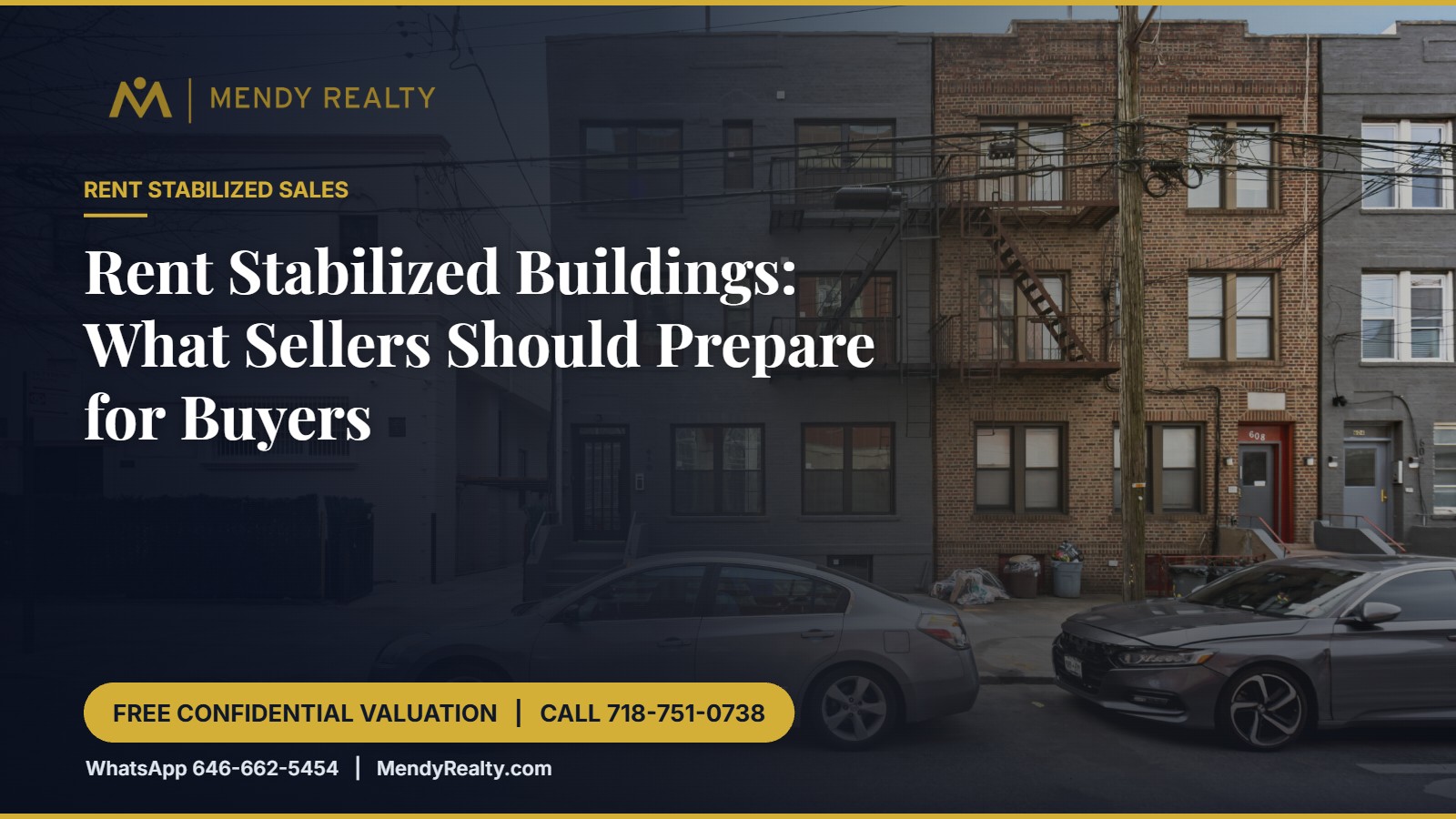
Owners of rent stabilized buildings in Brooklyn and across New York City often wonder who is buying and at what price. Buyers are active, but they underwrite regulated buildings carefully. The owners who prepare well give buyers confidence and keep negotiations focused.
Key takeaways
- Accurate unit by unit records are essential.
- Buyers price regulated income conservatively.
- Building condition and capital needs weigh heavily.
- A well organized file shortens diligence and protects price.
What to organize
- Unit by unit rent roll
- Lease copies and renewals
- Rent registration history
- Two years of expenses
- Recent capital work
- Open violations list
Know the rules
Rent stabilization rules come from New York State. General information is available from NYS Homes and Community Renewal: rent stabilization. Because the rules are technical, owners should rely on their attorney for questions about specific apartments.
How buyers evaluate
- Current incomeWhat the building earns today.
- Expense checkVerified operating costs.
- Capital needsRoof, boiler, facade and systems.
- Long term viewLocation, stability and holding horizon.
With regulated buildings, organized records are the strongest negotiating tool.
Choosing the right buyer
Some buyers specialize in long term holds of regulated housing. Others focus on mixed portfolios. A targeted outreach to the right group often produces stronger terms than a broad blast.
Frequently asked questions
Can I still sell a fully stabilized building?
Yes. Pricing reflects regulated income and condition.
Will tenants be affected?
Tenant rights continue under the new owner.
Should I invest in repairs first?
Sometimes. Compare the cost to the likely effect on price.
Helpful public resources
NYS Homes and Community Renewal: rent stabilization | NYC HPD | NYC Department of Buildings | NYC Department of Finance property
Related reading

Mendy Realty Inc. is a licensed New York real estate brokerage and Court Approved Fiduciary Broker serving Brooklyn, Manhattan and New York City with residential, commercial, estate and hotel sales. Call 718-751-0738.
This article is general information about real estate. This is not legal or tax advice. Consult with your attorney, accountant and tax advisor. Market conditions change; verify current details before making decisions. Equal Housing Opportunity.